Introducing Project Distant Light
I've started working on a small spacecraft. This all came from an idea - could a lone human in 2026 build and launch a small spacecraft and take a photo of the Earth, with the help of AI?
Turns out you can, and the vision grew a little bit...
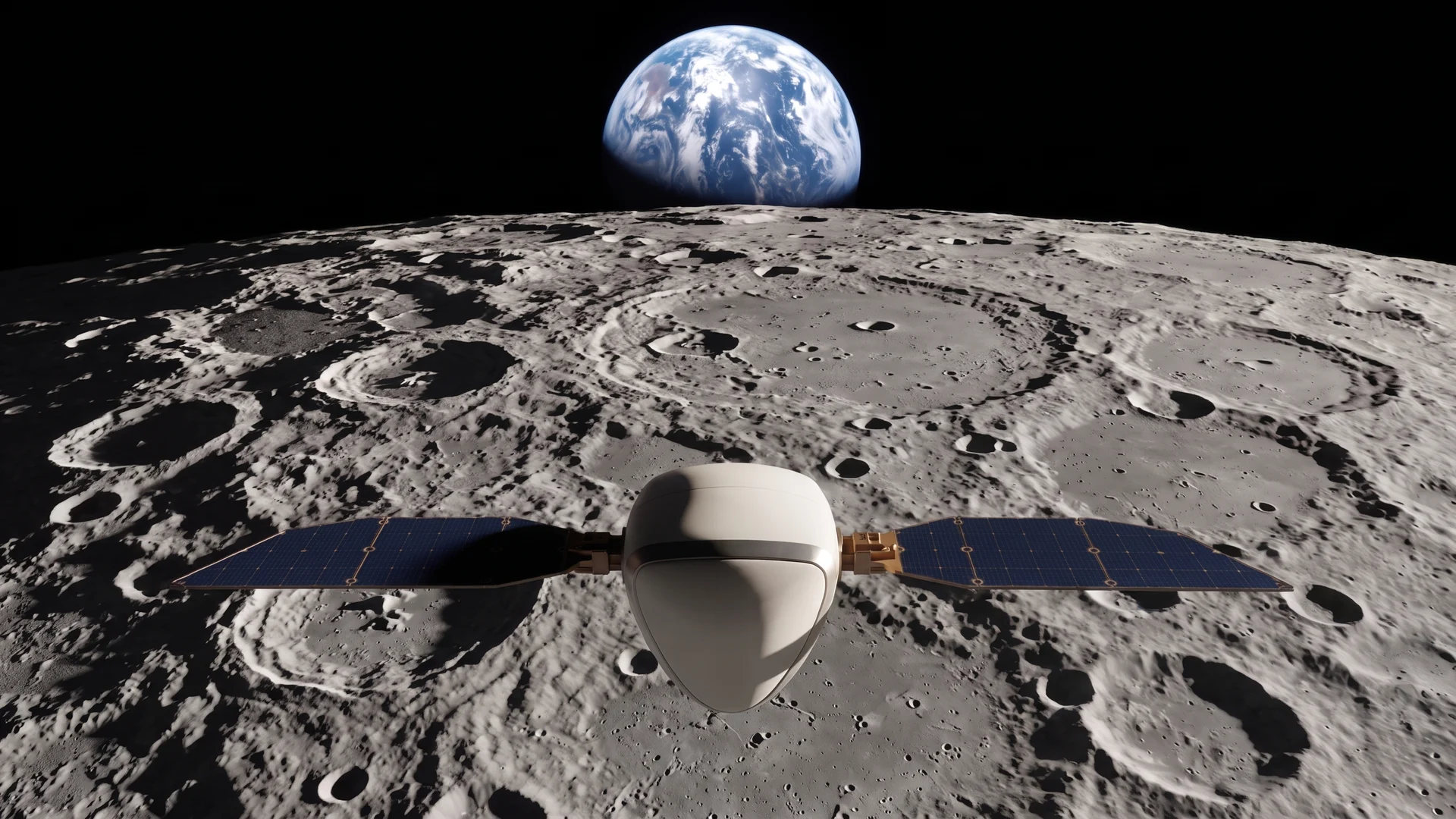
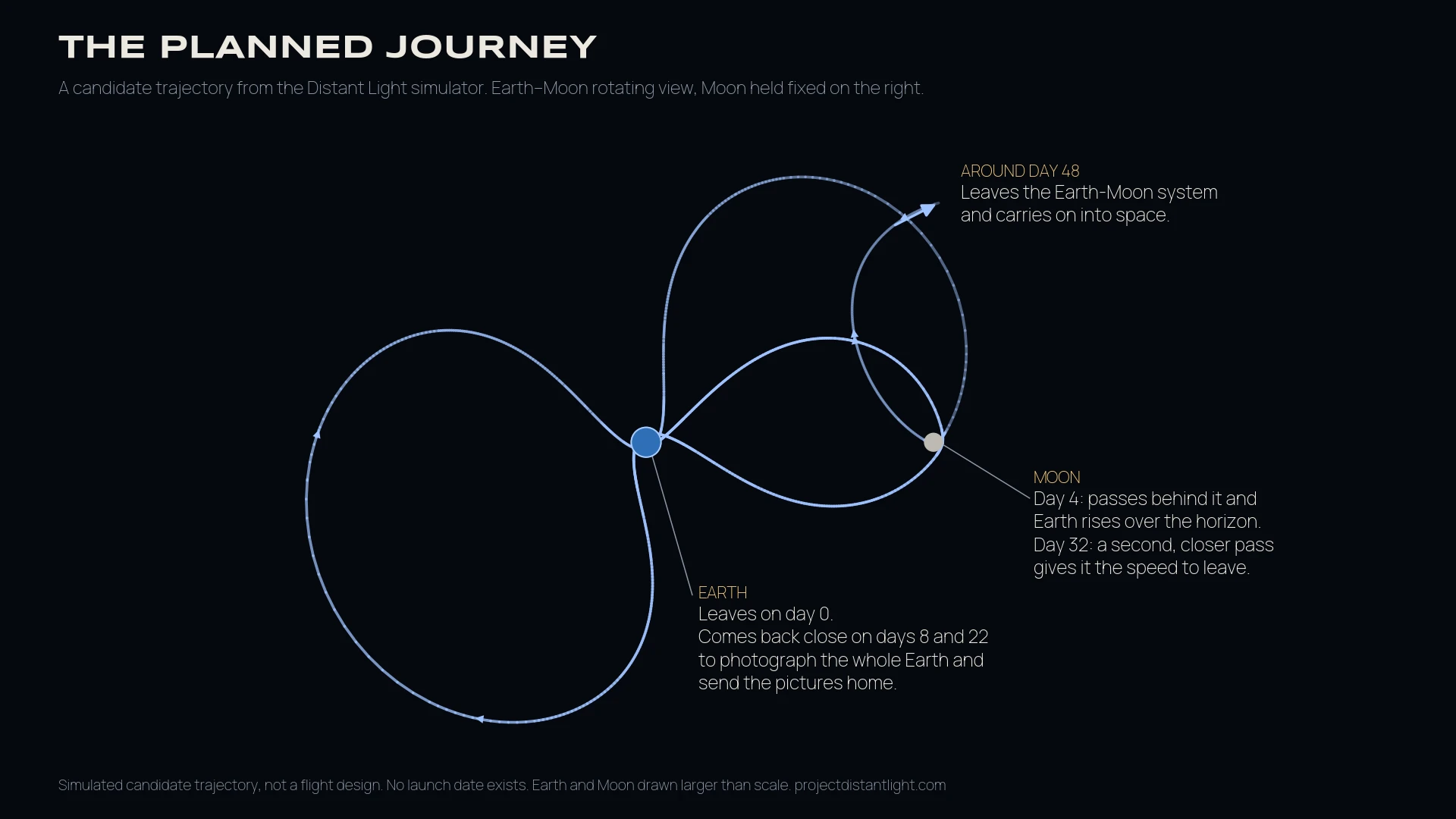
The plan now is to send it to the Moon, launched into space from someone else's rocket, have it photograph the Earth, then the Earth rising over the Moon's horizon, send the pictures home, and then leave the Earth and Moon behind for good... taking one last photo of both for good measure
The first photograph of an Earthrise was taken by the crew of Apollo 8 on Christmas Eve 1968, and the Artemis II crew photographed it again this year. Both came from large national space programmes. I'd like to find out whether a small, privately built spacecraft can take that kind of picture too, and to share the whole process as I go, so anyone who's interested can follow along. I'm hoping it gets a few young people interested in science and engineering along the way.
How it would work
The spacecraft would get into space on another mission's rocket. About four days after launch it passes behind the Moon. As it comes back round, the Earth rises over the lunar horizon. That moment only lasts a few minutes, and the whole route is planned around it.
It then loops back towards Earth twice. On those passes it's close enough to photograph the whole planet, and much closer to the ground stations, which makes it easier to send the pictures home. A second, closer pass of the Moon then gives it the speed it needs to leave. After about seven weeks it's out of the Earth-Moon system and heading off into space, still taking pictures of the Earth and Moon together as they get smaller.
Where things are now
It's very early. So far I've built a simulator that works out the route and the photographs it could take, and you can try it at projectdistantlight.com/mission-path. I've also been working through the navigation, the course corrections and the radio contact with Earth. The current study points to a small thruster that uses water for the course corrections, rather than a chemical rocket, which should keep things simpler and cheaper.
None of the numbers have been independently checked yet, so the next step is a proper review of the maths by people who do this for a living. After that I'll start talking to companies that offer rides to the Moon and to ground stations that could talk to the spacecraft. There's no launch booked and no launch date yet.
Following along
I'll post updates here as things happen, including the things that don't work. If you'd like them by email you can sign up on the home page. The project is also on X, Instagram, Facebook and LinkedIn.
If you work in small satellites, mission design or ground stations and would be up for a chat, I'd like to hear from you.
Lucas
Get updates by email
New posts by email when there is something worth saying.